The power of two
our journey as
an enterprise UX-team of 2
UX-team of 2 introduction
On October 24th, 2023, Evelyne Wauters and I had the privilege of presenting at UX Beers in Antwerp. We shared our experiences as a "UX team of 2" and how individuals with diverse backgrounds can form a successful partnership in enterprise UX projects. This article distills the insights from that presentation, offering our perspective on designing for complex business applications.
- Organization
- UX Beers Belgium
- Location
- Antwerp, Belgium
- Hosts
- Annie Stewart & Bavo Lodewyckx
- Hosted at
- Kan Design
- Date
- October 23rd 2023
- Topics
-
- UX methodology
- UX-team of 2
- Enterprise UX
Beyond the Surface of Enterprise UX
At first glance, enterprise applications might appear to follow standard UX requirements. Users are still people, employing devices under various conditions to achieve goals. However, the reality is more nuanced. A significant difference lies in the why: business applications exist to meet organizational needs, not merely personal use. These organizations often have unique business requirements, and enterprise software aims to boost productivity and efficiency by embedding specific business logic.
After over a decade of building UX for business applications, we felt compelled to share our encounters. While the core aim of UX design—improved user satisfaction, ease of use, and successful goal accomplishment—remains consistent, the environment presents distinct challenges.
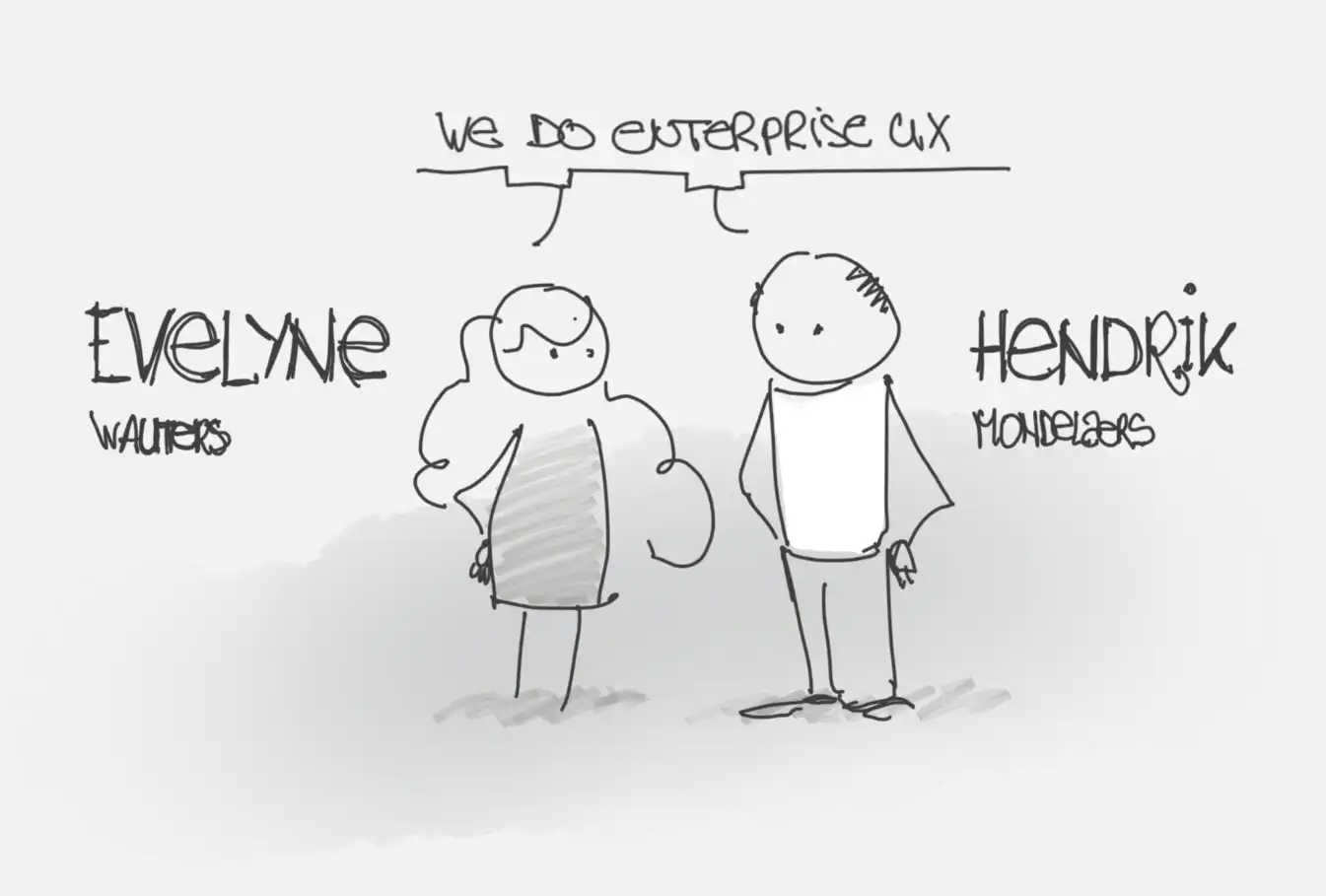
We are Hendrik and Evelyne, a well-attuned team of two User Experience Consultants. Our passion lies in UX, but our professional roots stem from different sides of the spectrum. Our projects primarily involve administrative business applications, which demand the user's full focus within complex environments that support a wide array of tasks and goals. Designing for complex UIs often begins where standard components fall short, requiring intricate queries and specific APIs. We firmly believe that UX doesn't operate in isolation; thus, we strive for integration at every level and stage of a project. From end-users and business stakeholders to developers, analysts, architects, and scrum masters, we aim to bring everyone "Aboard the User Experience Design Boat".
We are a team of two experienced UX consultants, specializing in enterprise application development. Combining forces from seemingly opposite fields of expertise, we discovered that UX Design had the power to unify our skills. Over several projects, a pattern emerged that proved beneficial for end-users, clients, and development teams alike.
How It All Started: Our Journey to UX
We didn't invent the "team of two" concept; it was a pattern we observed over time and then intentionally explored. Our backgrounds, though distinct, led us both to discover a passion for UX.
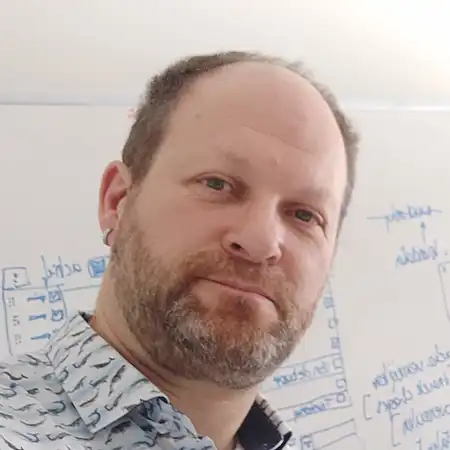
Hendrik's path: I started in marketing, transitioning from advertising to web design in the early days of "new media". I had the freedom to experiment with practices that are now considered unconventional, like inline styles, spacer GIFs, and Flash sites. As applications grew more complex, I moved into Project Management and acquired Functional Analyst/Business Analyst skills. While the aesthetic aspect of applications never truly faded, priorities shifted. Around 2010, I encountered a recurring line in functional analyses that no longer sat right with me: "The description of the user interface should be interpreted as a sketch... It is not intended to be an exact specification for the UI/color/typography". We had methodologies for PM, FA, and BA, but nothing truly covered interaction-related aspects. UX Design felt like coming home.

Evelyne's path: As a fan of Lego and Lego Technics, it was natural for me to study engineering and architecture. I was always fascinated by the technical workings of things and how one could design a functional house that perfectly met the inhabitants' needs through analysis. I found my way into the IT sector, leveraging the engineering part of my degree to become a software developer at Realdolmen, the same company as Hendrik. My first assignment involved adding features to a decade-old application that looked every bit its age—I affectionately called it "our dinosaur".
One morning, at the coffee machine, I had a conversation with an actual user—someone who used the application eight hours a day, every day. This encounter immediately bridged the gap between my development job and user reality. I began challenging user stories, driven by a desire to improve the lives of employees. It was then that I learned about UX, getting the chance to shadow Hendrik. For me too, UX felt like coming home, like creating "homes in the digital world".
What is Enterprise UX? Unique Challenges & Context
Many of our experiences resonate with insights shared by other enterprise UX practitioners, like Stéphanie Walter at Smashing Conf (Antwerp 2023). Here's a summary of the unique battles we face in enterprise UX:
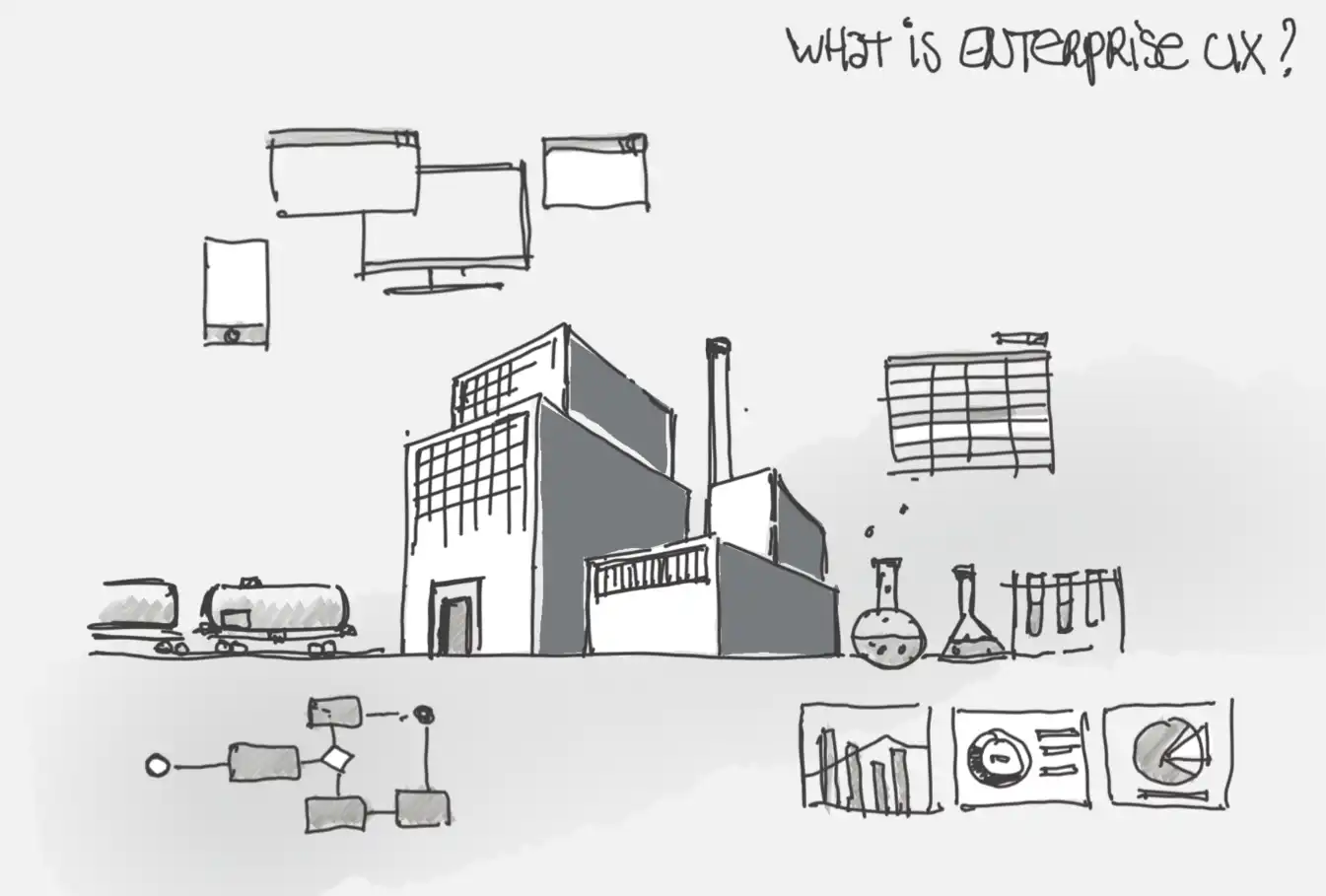
- Users at work: Enterprise applications are used by professionals within large organizations, and their usage is often mandatory, not optional.
- Complex UIs: These environments frequently involve intricate UIs with extensive tables, dashboards, and metrics.
- Feature-centric focus: The primary focus is often on features to fit business processes, with user experience sometimes neglected. The misconception that internal applications don't need to "look pretty" overlooks employee well-being and productivity benefits.
- Domain expertise required: You must deeply understand the specific industry, its science, and its jargon. For instance, designing for a Daikin maintenance app or Kraken BASF requires domain-specific knowledge.
- Digitizing legacy processes: Many complex processes exist only on paper and are being translated digitally for the first time.
- Workshop dynamics: Workshops with employees differ due to pre-existing relationships and hierarchies, which must be considered when forming groups.
- Limited competitive examples: It's often hard to find or access reference projects or competitive examples.
- Varied timelines: Project cadences are often client-driven, leading to highly variable timelines.
- Acceptable learning curve: Unlike B2C applications, a certain learning curve may be acceptable due to the complexity of the tasks.
- Context is king: The specific operational context can have an enormous impact on design.
- Technical constraints: We often deal with special devices (e.g., rugged, ATEX-certified), slow update cycles, older frameworks, and limited functionality.
Roles in a Business Application Project: Connecting the Dots
Building an enterprise project truly "takes a village," involving a multitude of roles. The IT landscape is vast, with titles and responsibilities varying greatly between projects. While some companies use fancy titles like "mystical full-stack magician" or "UI/UX unicorn," it's crucial to understand where you fit in and to know your "neighbors" on the project team.
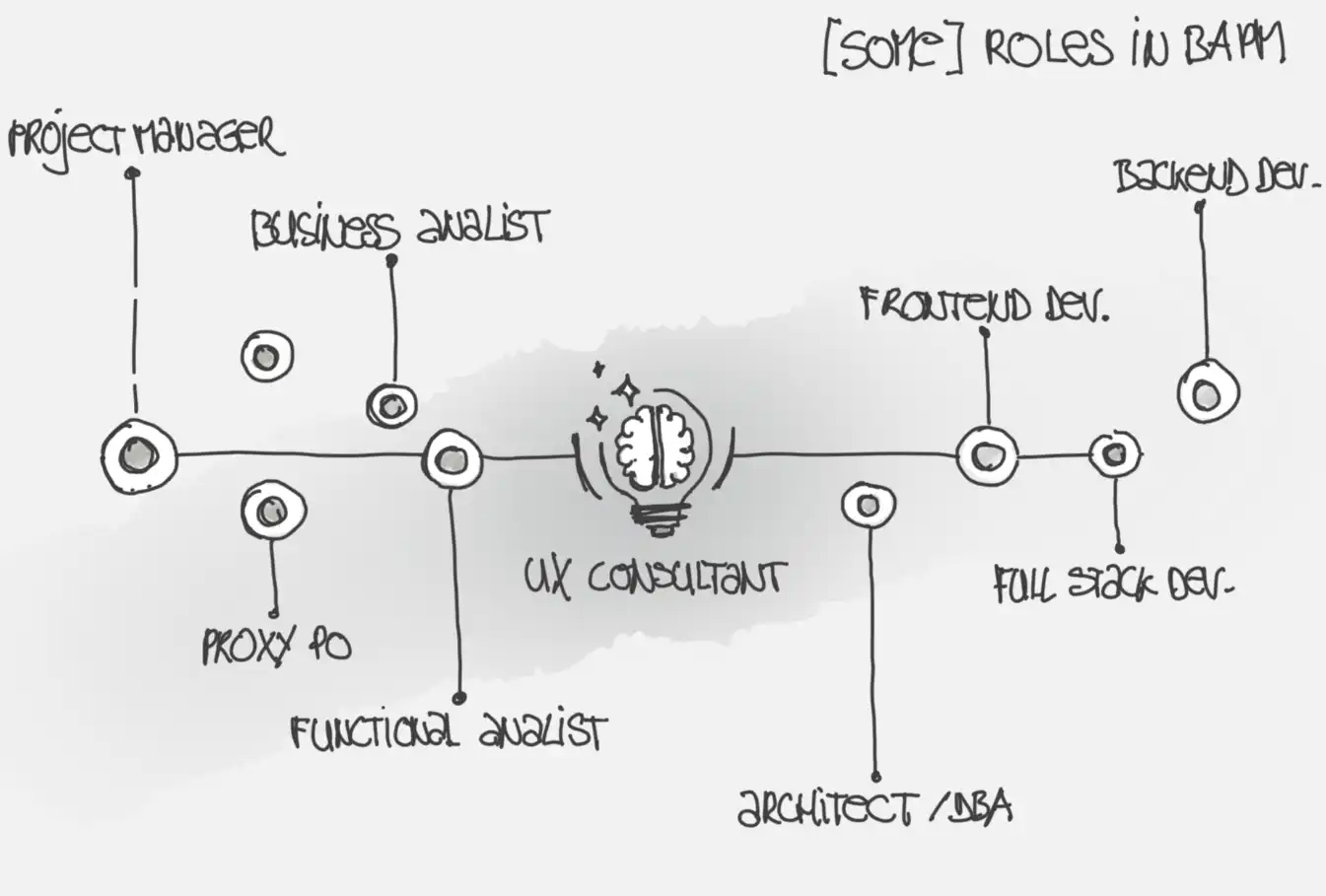
Having experienced roles across the spectrum—from project management and analysis (Hendrik's background ) to backend and full-stack development (Evelyne's background )—we deeply understand the challenges and frustrations at each stage. This experience taught us the paramount importance of good communication and seamless information handover between roles.
Our diverse backgrounds have equipped us with both hard and soft skills, but most importantly, a profound understanding of the different profiles involved. This is a significant advantage, as these profiles are the ultimate users of our documentation and wireframes.
We met in the middle of this spectrum and continued to expand our skills. Hendrik enjoys diving into HTML/CSS wireframes , while Evelyne has dabbled in functional analysis. This overlap ensures we cover all bases in the development line.
Get UX Involved ASAP! We've consistently observed that the entire team benefits when UX is considered from the very beginning. Engaging in initial conversations through UX workshops, understanding project scope, meeting developers, and defining needs early in the offering process are invaluable.
We honestly don't believe in "unicorns" – individuals who master every UX specialization. By working in tandem, we leverage our individual fields of expertise and preferences, effectively covering a broader range of UX specializations.
Context Rules: Stepping into the User's Shoes
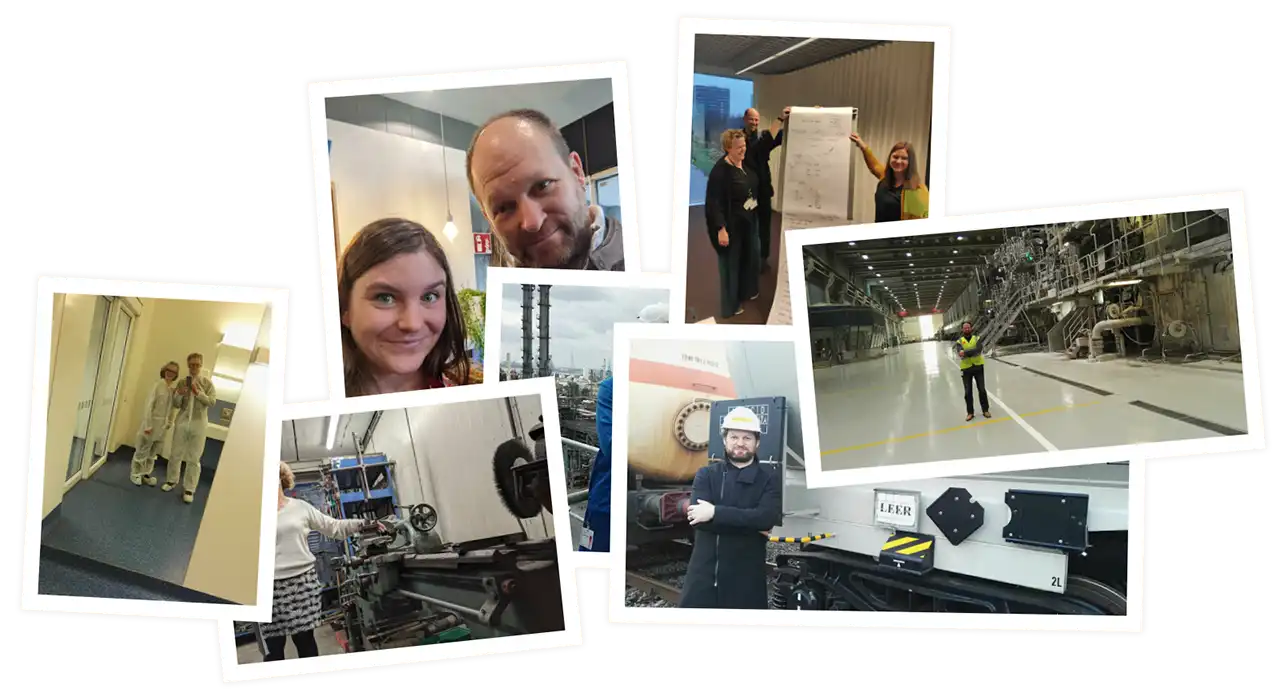
Doing enterprise UX has granted us access to environments we wouldn't otherwise experience. This often means restricted areas and factories where photography isn't allowed – sometimes you just take the candy and run!
But why is context so important? Because we typically work behind desks, it would be presumptuous to assume a full understanding of the circumstances under which end-users operate. This is precisely why context analysis is crucial in enterprise UX. You simply cannot imagine the complexities without experiencing them firsthand.
Our experiences include:
- Observing inspection tools in an oil refinery.
- Visiting the Finocas research center for steel application, observing metal analysis.
- Shadowing inspectors of railway wagons transporting liquid gas at AGT Oil Tanking, revealing surprising workflow patterns (e.g., inspecting one side of a carriage then the other later).
- Working with companies like Idewe and Pfizer (pharmaceuticals), where we had to wear throw-away jumpsuits in clean rooms, highlighting friction points.
- Understanding the challenges in a noisy paper production facility.
- Examples like Belgoprocess (Rimses).
Methodology & Tuning: Our UX Process
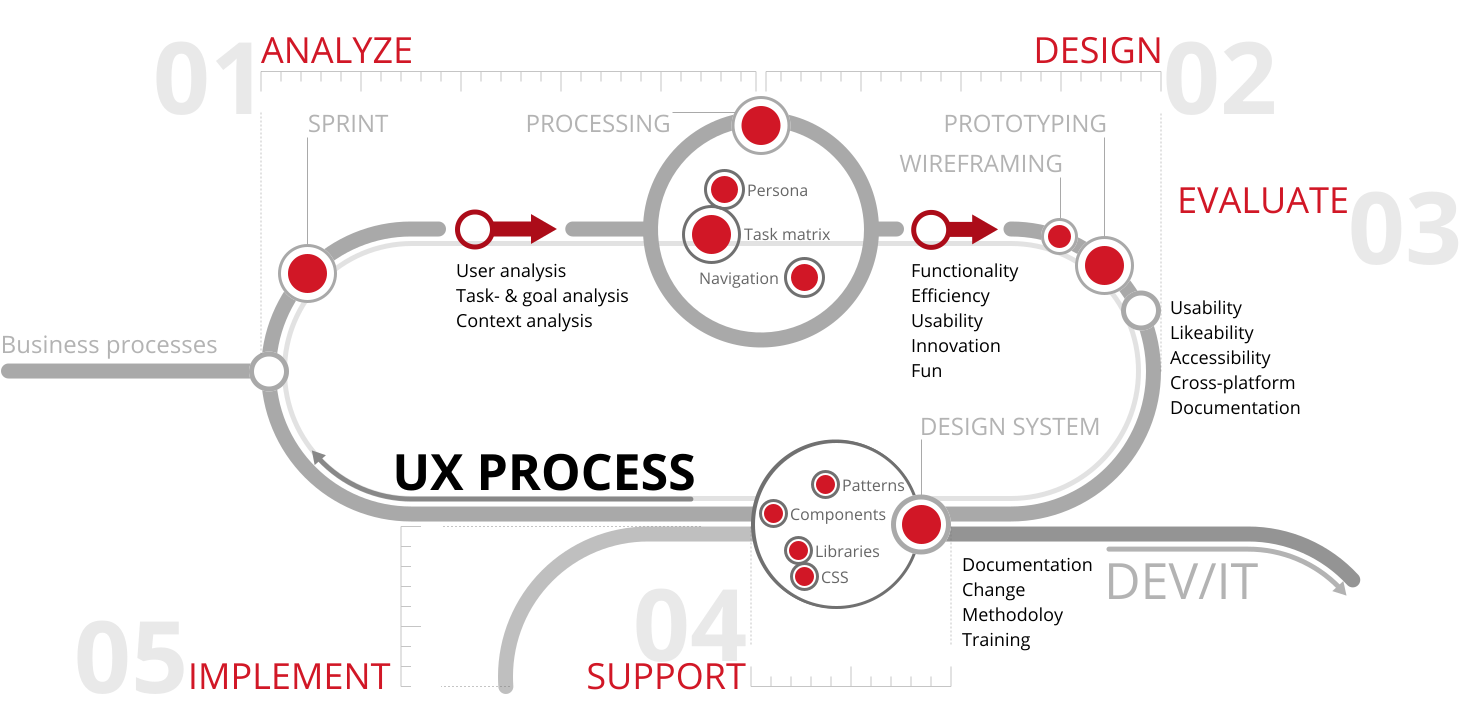
This infographic, developed primarily for internal UX training, illustrates our process. While our UX team is small, we emphasize that UX is everyone's responsibility, fostering constant UX awareness within the organization. All methodologies are vital within a project.
How We've Refined Our Team of 2: Historically, UX roles in consulting agencies focusing on enterprise UX were often filled by a single person. But "once you go 'team of two,' you never go back!" Here's how we've fine-tuned our approach:
- Workshops together: We insist on conducting workshops together. This ensures we both gain first-hand information and a true "feel for the client" and their company culture. One of us takes notes while the other facilitates at the whiteboard, switching roles as needed when ideas emerge or questions from users require deeper understanding. When in the flow, we both draw enthusiastically. The facilitator at the whiteboard acts as a performer, keeping everyone engaged, while the other observes the audience's micro-expressions. Coffee breaks are invaluable for gathering informal information from different groups. Our diverse backgrounds shine here: Hendrik excels at working out business processes from an analytical perspective, while Evelyne keeps technical aspects in mind, ensuring we don't promise "rainbows and unicorns".
- Recap & output: The car ride home is crucial for summarizing findings and feelings while memories are fresh, reflecting on user responses. Post-processing is done by one of us but always discussed collaboratively, often at the drawing board.
- Collaborative wireframing: Drawing wireframes together in this digital age is fantastic. Seeing each other's cursors move on Adobe XD artboards (yes, we're still there for now!) is powerful. One leads on a blank canvas, laying out a starting point, and we regularly check in for feedback. This allows us to spot what might have been missed and verify if user needs are met. Being present at the workshops means we can relive user voices, sparking new ideas. This essentially creates an extra agile iteration loop with a professional UX review, allowing for continuous design refinement.
- Cross-pollination: Working on different projects simultaneously provides the benefit of cross-pollination. Business processes from one sector can often be mapped to another, allowing for impact on a more abstract level.
Win/Win/Win/Win: Benefits of Our Team of 2
The reality for enterprise applications is high complexity often coupled with limited UX budgets. There was a time when clients simply expected us, as experts, to "figure it out". Our solution was to work on multiple projects simultaneously, a approach that works better with a team of two.
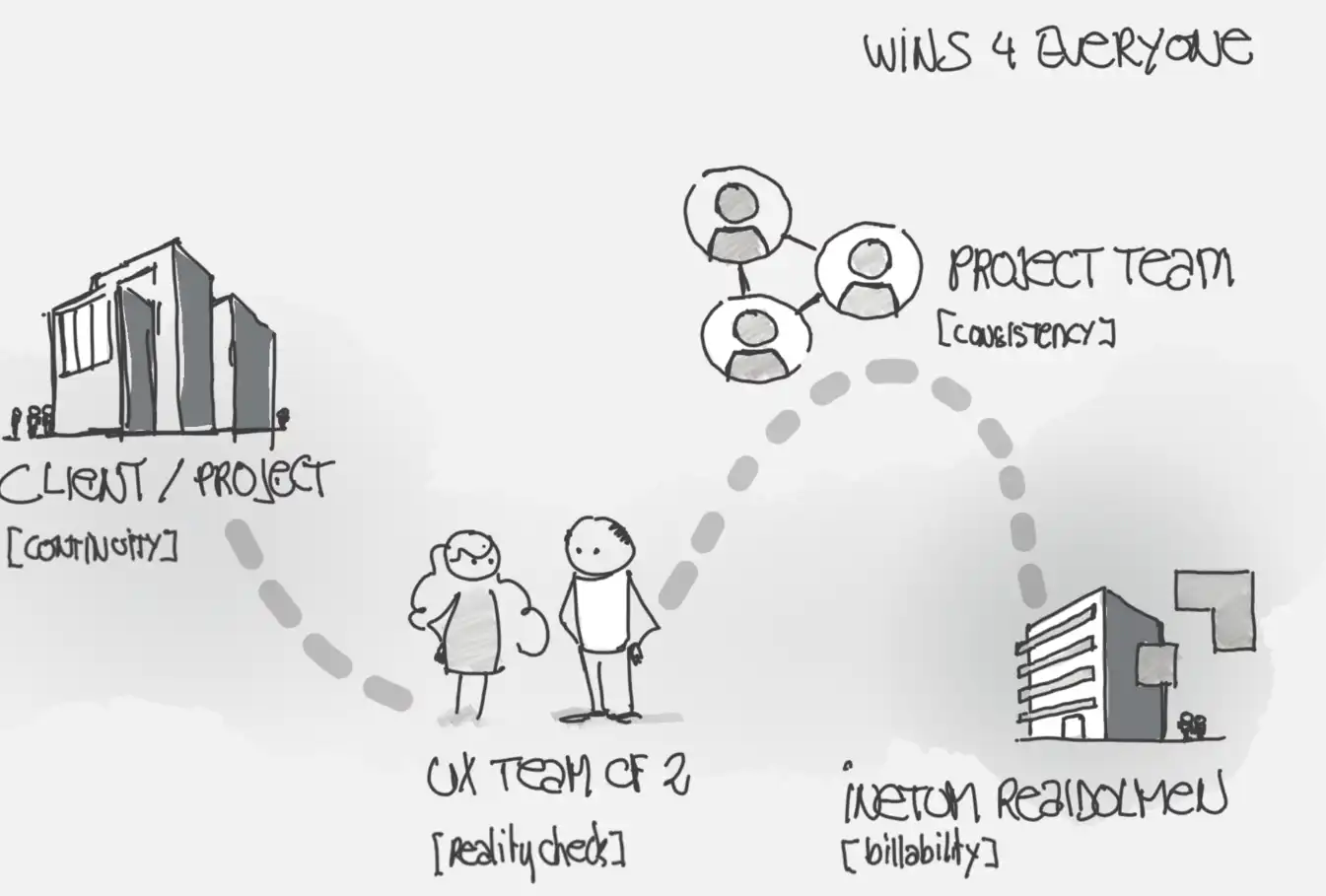
Benefits of our Team of 2:
- Client/Project:
Complementary skillsets.
Enhanced observation (x2) and higher efficiency in workshops, triggering more insights.
Continuity.
Faster progress by dividing tasks like developer communication or handling new questions. - Project Team:
Consistency: We know how to communicate with everyone involved and understand their concerns, ensuring everyone gets what they need.
Understanding the impact of UX choices on the team (time, value, money). - UX Team of 2 (Our Own Well-being):
Ability to bounce ideas off each other.
Can fill in for each other when needed.
Find help to get unstuck.
Shared responsibility: managing multiple projects can be frantic, and sharing this burden helps immensely.
Reality check: the iterative process includes an extra "expert-validation" loop with two people before going to end-users.
More fun and improved mental well-being. - Inetum Realdolmen (our company):
Opportunity to work on new offerings while managing multiple projects.
Urgent projects can still move rapidly, while projects with limited client time can progress at their own pace without significant impact on billability.
Building Your Own UX Team of 2: Easy vs. Hard
It took us several projects to realize that our way of working was something reproducible and cultivable. While we don't definitively know if two is always better than one, you can create conditions for high effectiveness. Here are factors that are easy to achieve versus those that are more complex:
Easy to Achieve:
- Cultivate a Co-create Culture: Foster an open and egalitarian environment where design "superheroes" lack "superegos". If someone is less skilled in one area (e.g., drawing on a whiteboard), still believe in their other skills.
- Design as Equals: We consciously design simultaneously, as equals at the whiteboard. Not every line will be pixel-perfect, but this is compensated by complementary skillsets.
- Complementary Skillset: Pair people with different focuses and expertise, drawn to UX. One might excel at wireframing, the other at interviewing.
- Embrace Diversity: Consider different professional backgrounds, experiences with various clients, sectors, and roles within the company.
Hard to Achieve:
- Organically Grown Team: Our team evolved organically, which can make replication harder.
- Decentralized Structure: We are still positioned in different units within our company.
- Lateral Thinking: Solving problems through indirect, creative approaches, moving beyond traditional step-by-step logic.
- Divergent & Convergent Thinking: Balancing creative (horizontal) thinking for idea generation with analytical (convergent) thinking for logical answers.
- Demographic Diversity: Considering differences in age, gender, background, familial situation, and overall experiences.
- Finding a Connection: Ultimately, all these elements don't account for the most crucial factor: finding someone you genuinely enjoy working with, someone who can become your "partner in crime" for future projects.
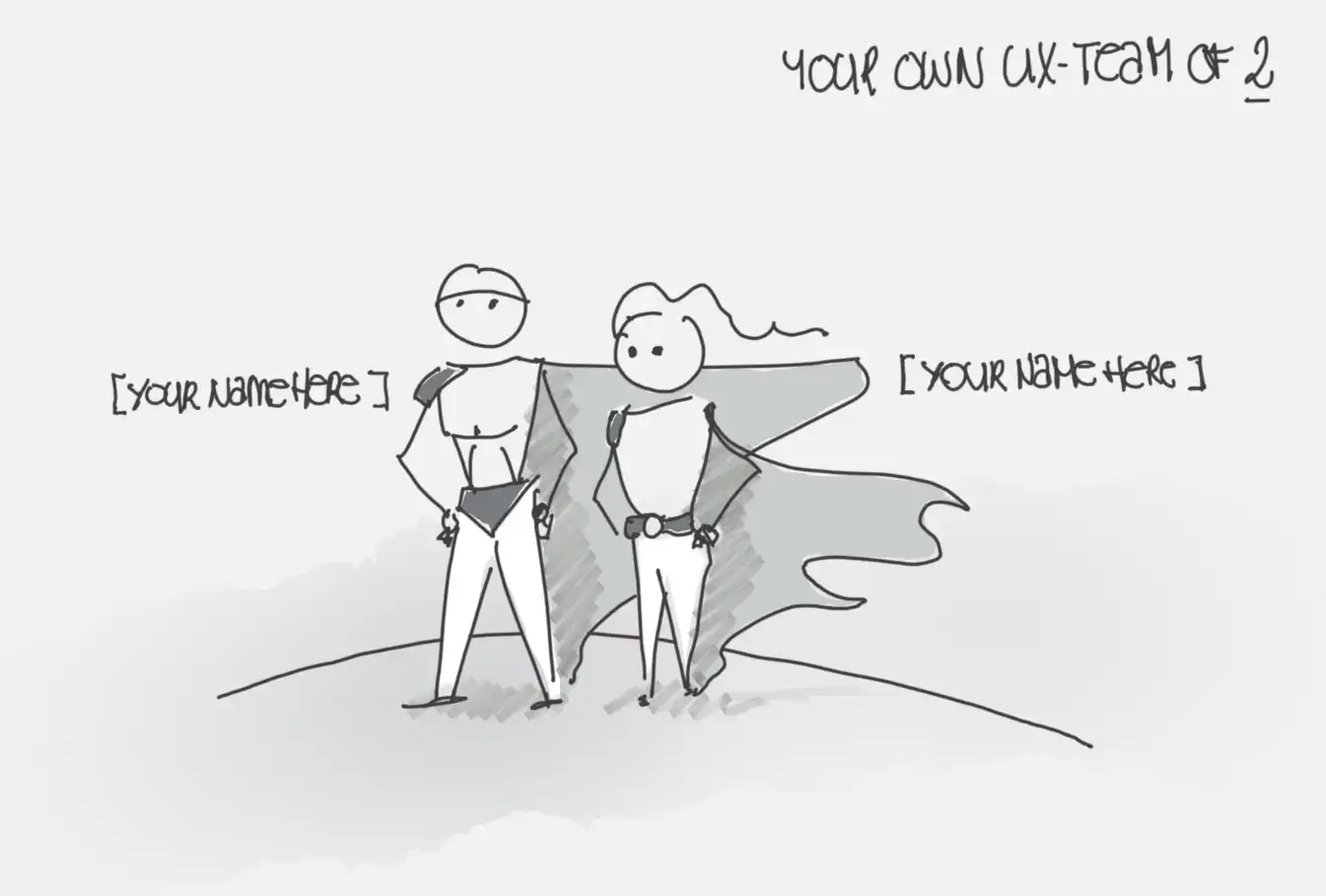
Go Get Some: Conclusion
To conclude:
- Identify your strengths, cultivate your personal expertise and focus, and broaden your skills.
- Experiment with different methodologies to discover what works best for you or your team.
- Learn from each other: UX Design is a craft that cannot be learned in isolation.
Let’s find out how enterprise UX can work for your project
Discover how blending UX, business analysis, and front-end know-how helps bridge gaps between users, stakeholders, and developers.
Explore my services